

.jpg)
For decades, the clear, brilliant-cut diamond has been the ultimate engagement ring code. But the landscape is quietly, yet decisively, shifting. It’s no longer just the classic colourless diamond making the cut; couples are increasingly saying yes to colour. Lily Collins wears a delicate light pink diamond engagement ring; Gwyneth Paltrow has an enormous 12-carat blue sapphire engagement ring from Brad Falchuk. Then there’s the media frenzy surrounding Jeff Bezos’ fiancée Lauren Sánchez, whose engagement ring features a cushion-cut pink diamond reportedly weighing between 20 and 30 carats.
Is it limited to celebrities? Well, even real-world brides are no longer wedded to the idea of a clear, classic diamond ring. For Sanjana Shah, founder of the luxury wedding design studio Three Entertainment, the choice was personal. She received a cushion-cut champagne diamond engagement ring, “My husband comes from a family that has specialised in brown diamonds for decades, so the colour carries meaning for us - there’s a warm, golden depth to it.” Another bride, Morgane Anderson’s wedding ring is an incredible 3.5-carat Colombian emerald, set with two diamonds on each side. “Emeralds have depth and character, and no two are ever the same, which makes it feel much more personal. We also added two very small stones hidden on the band that represent our birthstones, which makes the ring even more meaningful to us,” she says.
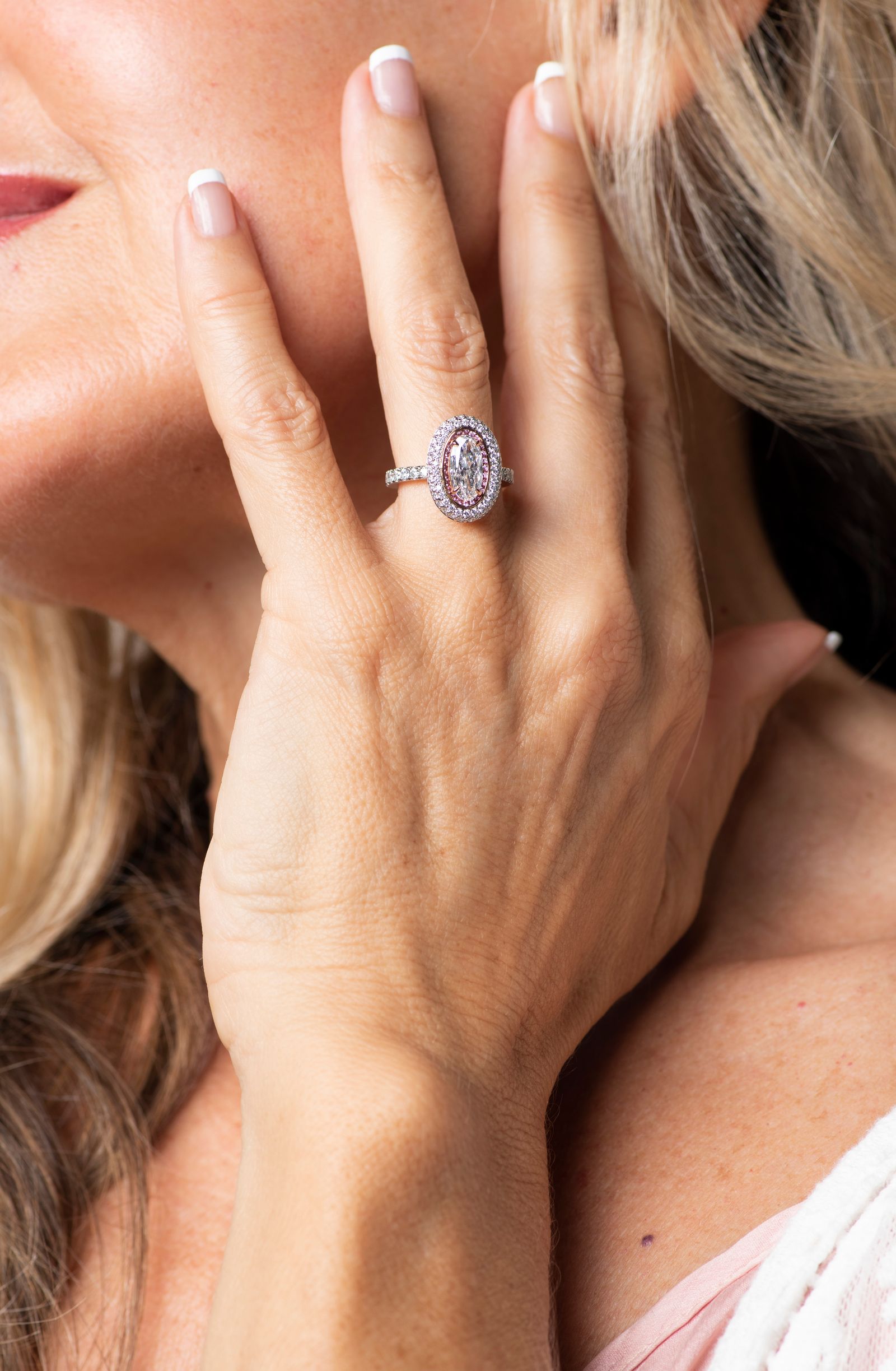
Nick Ireland, designer and founder of his eponymous Brisbane-based jewellery brand that specialises in natural and argyle pink diamonds, says, “Couples want a ring that feels like it truly belongs to them – made for them, not simply picked off a shelf. Coloured diamonds like champagne and yellow are being chosen to create something that feels genuinely personal.” They add a layer of rarity and individuality. As natural stones that are harder to come by, there’s also a broader cultural pull toward less common pieces that are difficult to find and exclusive.
For instance, owning an Australian-made ring set with Australian-mined diamonds carries particular significance. With the closure of the Argyle mine in 2020 due to exhausted supply, no new stones will ever be mined – what exists now is all that remains. “Customers like this exclusivity and history. It isn't just a unique ring, it's an opportunity to own something that cannot be replaced,” he adds.
.jpg)
Clearly, coloured diamonds – from soft champagne and blush pink to vibrant canary yellow – are emerging as the choice for new-age couples. “Yellow diamonds remain the most accessible entry point into colour, but there is growing curiosity around pinks and more unusual tones. I’m seeing strong interest in subtle gradients, bold colour contrasts, and antique or old-cut coloured stones, with a real focus on structural balance and movement within the setting,” says New York designer Josefina Baillères, who’s also one of the finalists of Fashion Trust US 2026.
For Argyle pink diamonds, Nick notes that many clients favour three- and five-stone settings to showcase the colour best. While rose or yellow gold is sometimes used to enhance warmth and contrast, most prefer platinum for its clean aesthetic, simplicity and durability – a choice that extends across pink, yellow and champagne diamonds alike.
Based in Paris, jewellery house Tropical Thursday Paris notes that when colour enters a piece, excess becomes unnecessary. “The stones already carry visual intensity, so settings tend to be cleaner and more minimalist. Some clients choose saturated hues, where the ring becomes almost a visual signature. Colour becomes the focal point, and it needs balance – whether through proportion or subtle combinations with other stones.”
.jpg)
That said, the traditional white diamond remains dominant in the engagement space, even as younger generations grow more comfortable making unconventional aesthetic choices. “Around two to three years ago, I began noticing more diversity in stones and ring designs,” says international luxury wedding photographer Maddy Christina. “It hasn’t been a dramatic shift, but there’s clearly more intention and individuality in the choices couples are making.” Working largely with American clients marrying in Europe, she notes that the decision feels personality-driven rather than regional. “With my Arabic clientele, however, the relationship to jewellery is culturally very different, so comparisons are more layered.”
As coloured diamonds move from rarity to request, designers are rethinking how best to frame them within a contemporary engagement ring. The question is no longer whether to use colour, but how to present it with balance.
Instagram content
For instance, Argyle pink diamonds, given their rarity and price, are typically used as accent stones. “Mostly, they are set in three-stone designs with a white diamond centre, encircled in a halo, or subtly embedded along the band. While they remain the hero of the piece, framing them with white diamonds enhances their colour without creating visual competition. Champagne and yellow diamonds, on the other hand, are often positioned as the central focus – either flanked by delicate white side stones or set alone in a solitaire,” Nick shares. In doing so, coloured diamonds become the starting point of the design narrative.
Adding to this, Josephine shares how she crafted an antique canary yellow pear-shaped diamond ring, The Wavy Solstice, using a pavé gradient that transitions seamlessly from precisely matched yellow diamonds into white diamonds along the band. The shift is subtle yet deliberate - a quiet play on light and tone. In contrast, she recalls designing a ring for a couple where a 10.6-carat canary diamond was paired with pink pavé sapphires. “The harmony between yellow and pink wasn’t purely aesthetic,” she explains. “It reflected something deeply personal about the couple.”
As coloured diamonds gain ground in the bridal space, their value is determined largely by the intensity and purity of their hue that directly influences rarity and price. “Champagne and warmer-toned stones are among the few colours that can be priced below white diamonds,” Nick notes, making them a more accessible entry point. But Argyle pink and natural blue diamonds command some of the highest prices due to extreme scarcity and finite supply. “True natural pink diamonds remain among the rarest diamonds in the world, and their pricing reflects that scarcity,” Josephine adds. Fancy yellow diamonds, particularly in intense and vivid grades, are also highly coveted.
However, she adds that exceptional natural white diamonds – particularly antique stones – continue to hold enduring value, prized for their rarity, provenance, and timeless appeal.
The shift toward coloured diamonds is undeniable. As auction houses spotlight rare pinks and celebrity rings circulate across platforms, the conversation will only grow louder. Yet jewellers agree that while coloured stones will be discussed – and desired – more than ever, they are unlikely to eclipse the dominance of the white diamond. “There is something inherently traditional about a white diamond in an engagement ring,” Nick notes. Coloured diamonds won’t replace tradition, but they will continue to attract those seeking something deeply personal and rare in their engagement rings.


-2.jpg)