


Across the Arab world, people have learnt to watch history disappear through a screen. A phone lights up in a hand in Beirut, Baghdad, Ramallah and Damascus. A social media video begins. Heavy plumes of smoke rise over the rubble of Maqam Shamoun Al Safa, the burial place associated with Jesus’s disciple Simon Peter in Southern Lebanon’s Chamaa village, after the shrine was struck by Israeli forces. The image travels quickly – stone broken open, dust suspended in the air, the outline of a holy place interrupted. In homes, taxis and offices, there is the same sharp intake of breath, followed by heartbreak and anger. In our corner of the world, destruction of a monument is never only the collapse of stone; it is an injury to memory and to the innate belief that some places might outlast the violence around them.
To write about heritage in this region is often to be pulled towards the language of war. Yet the monuments themselves are older than the conflicts that scar them and more intimate than the language of geopolitics. A mosque, citadel, church, library – these are not simply “sites”. They are vessels of continuity, keeping the shape of people’s memories intact when so much else is unstable. What has been lost in recent years is immense; what remains at risk is greater still. The effort to preserve, restore and document these sites has become one of the region’s most urgent cultural questions.
In Iraq, the story of endangered heritage has become inseparable from the one of modern civilisation. The Great Mosque of Samarra, with its iconic spiral minaret, remains one of the masterpieces of the Abbasid era. However, years of instability and the long afterlife of conflict have left the country’s heritage vulnerable not only to attack but also neglect, encroachment, environmental pressure and the slow erosion that follows institutional strain.
Ashur, one of the capitals of the Assyrian empire, remains on Unesco’s List of World Heritage in Danger, a reminder that Iraq’s heritage has endured not only spectacular violence but years of conservation strain. In Mosul, the damage was both architectural and intellectual. In 2015, the Mosul Museum was devastated, its collections smashed and looted, while the Mosul Library was torched by ISIS, carrying with it priceless manuscripts and archives.
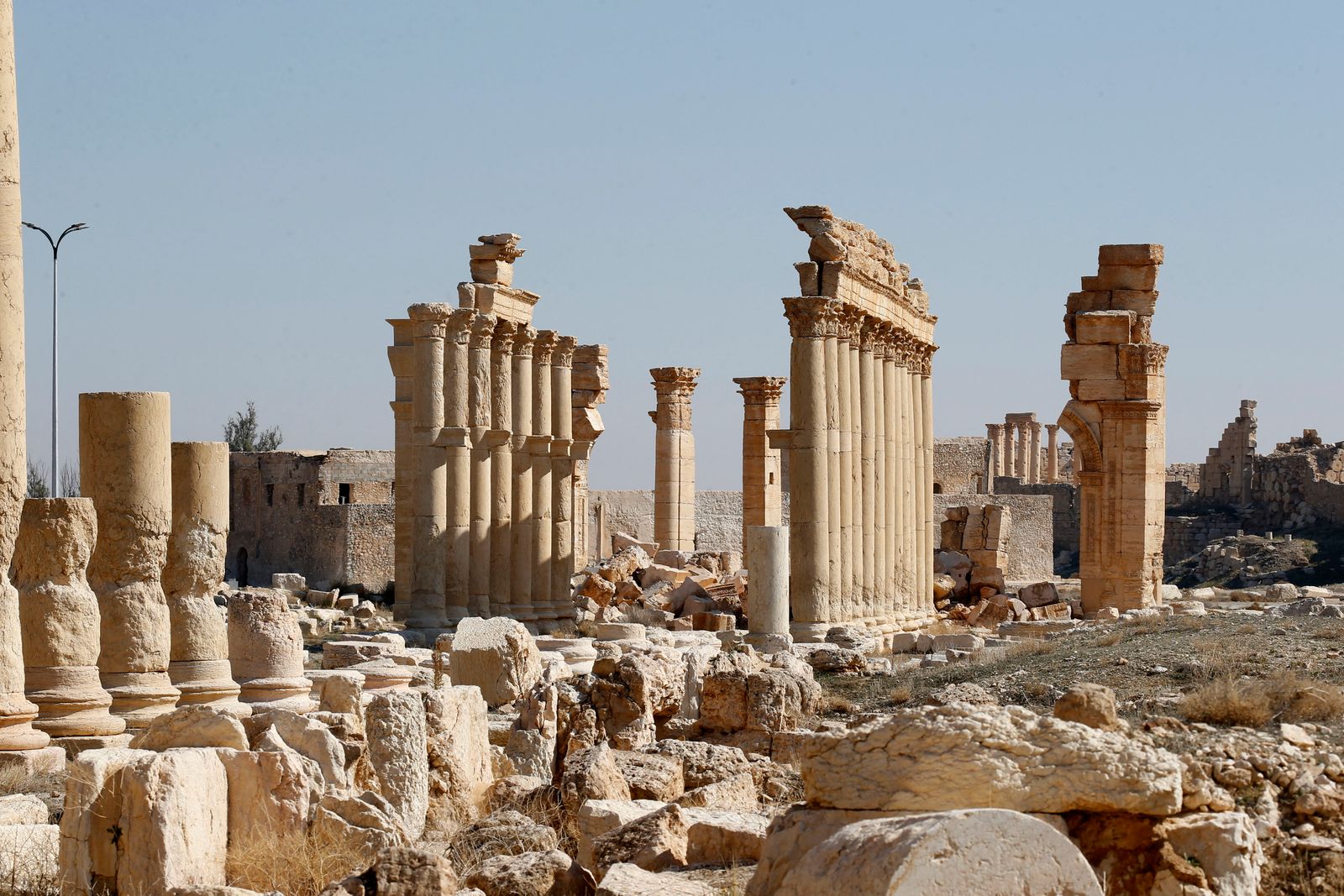
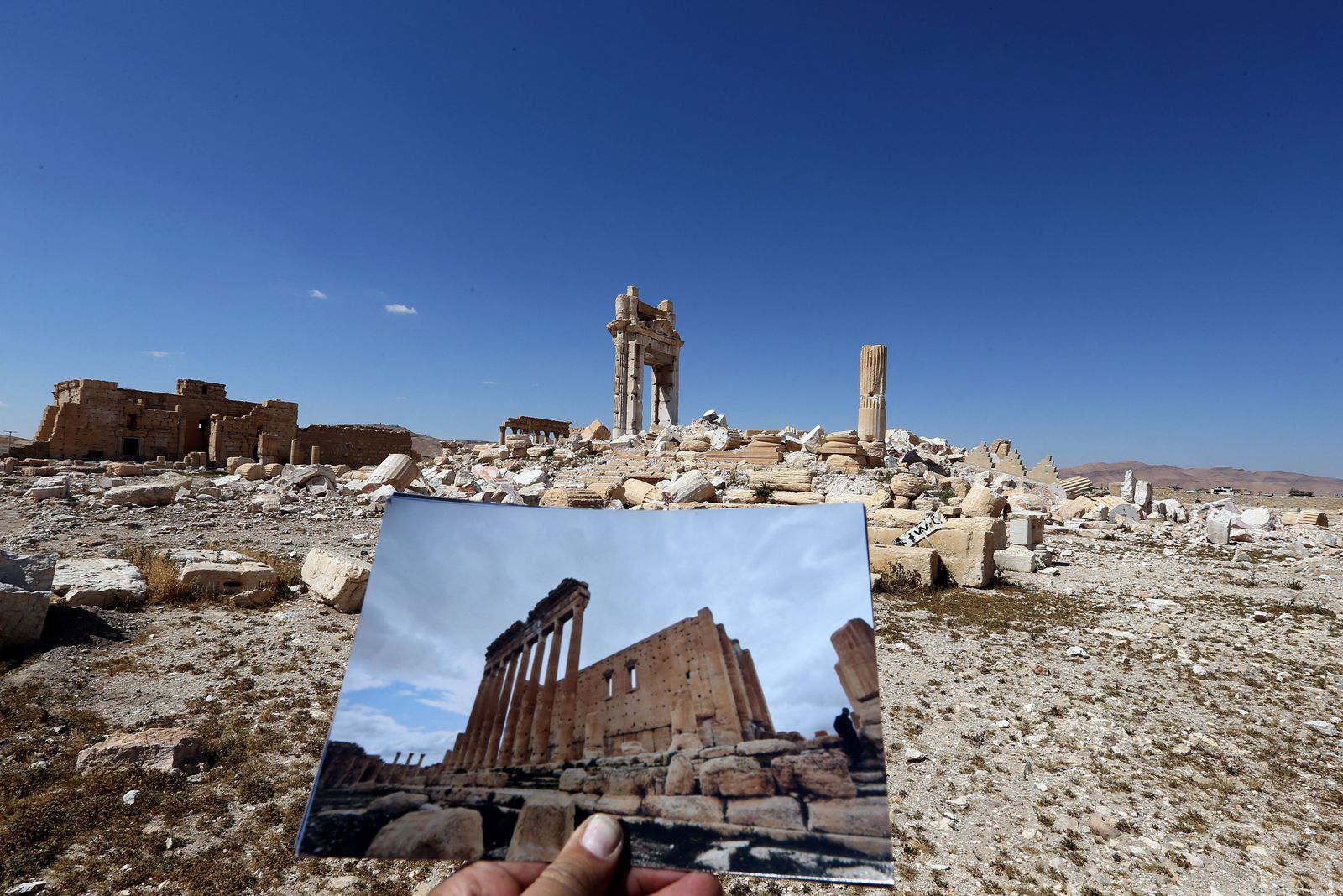
If Iraq revealed the scale of deliberate attacks on heritage, Syria showed how cultural loss can become systematic and enduring. Palmyra remains its starkest emblem. “We lost irreplaceable monuments,” says professor Maamoun Abdulkarim, archaeologist and former head of Syria’s Directorate-General of Antiquities and Museums. Yet his warning extends beyond ISIS’s destruction. Illicit excavations, especially in the Palmyra region, continue to strip sites of archaeological layers and scientific data, while the absence of meaningful restoration since 2017 has deepened both natural and human-induced deterioration. The result, Abdulkarim warns, is an urgent need for rigorous restoration of The Archaeological Museum of Palmyra, citadel, main temples and Arch of Triumph – work that preserves authenticity rather than replacing it with imitation.
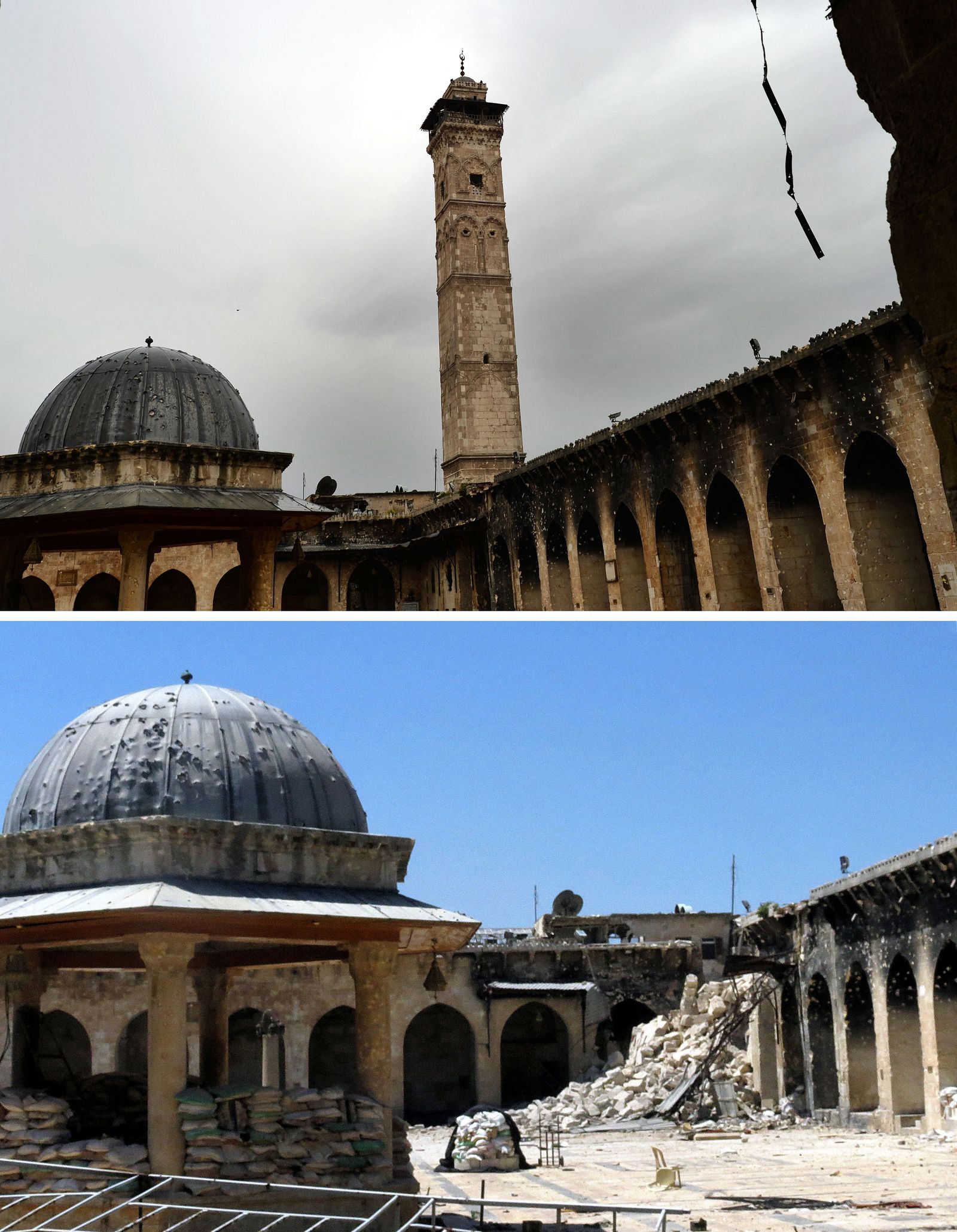
He goes on to describe the Ancient City of Aleppo as “one of the most complex and critically endangered heritage cases today”. During the conflict, Aleppo was transformed into a battlefield; its markets, residential quarters and historic urban fabric were torn apart. But Abdulkarim is clear that the threat did not end when the front lines shifted. He further warns, “Today, Aleppo faces an additional and equally serious challenge – the proliferation of unregulated construction driven by pressing social needs and in some cases, by private business interests. Crac des Chevaliers, one of the world’s best-preserved medieval Crusader castles, also sustained damage during the conflict, though early restoration helped stabilise the site.”
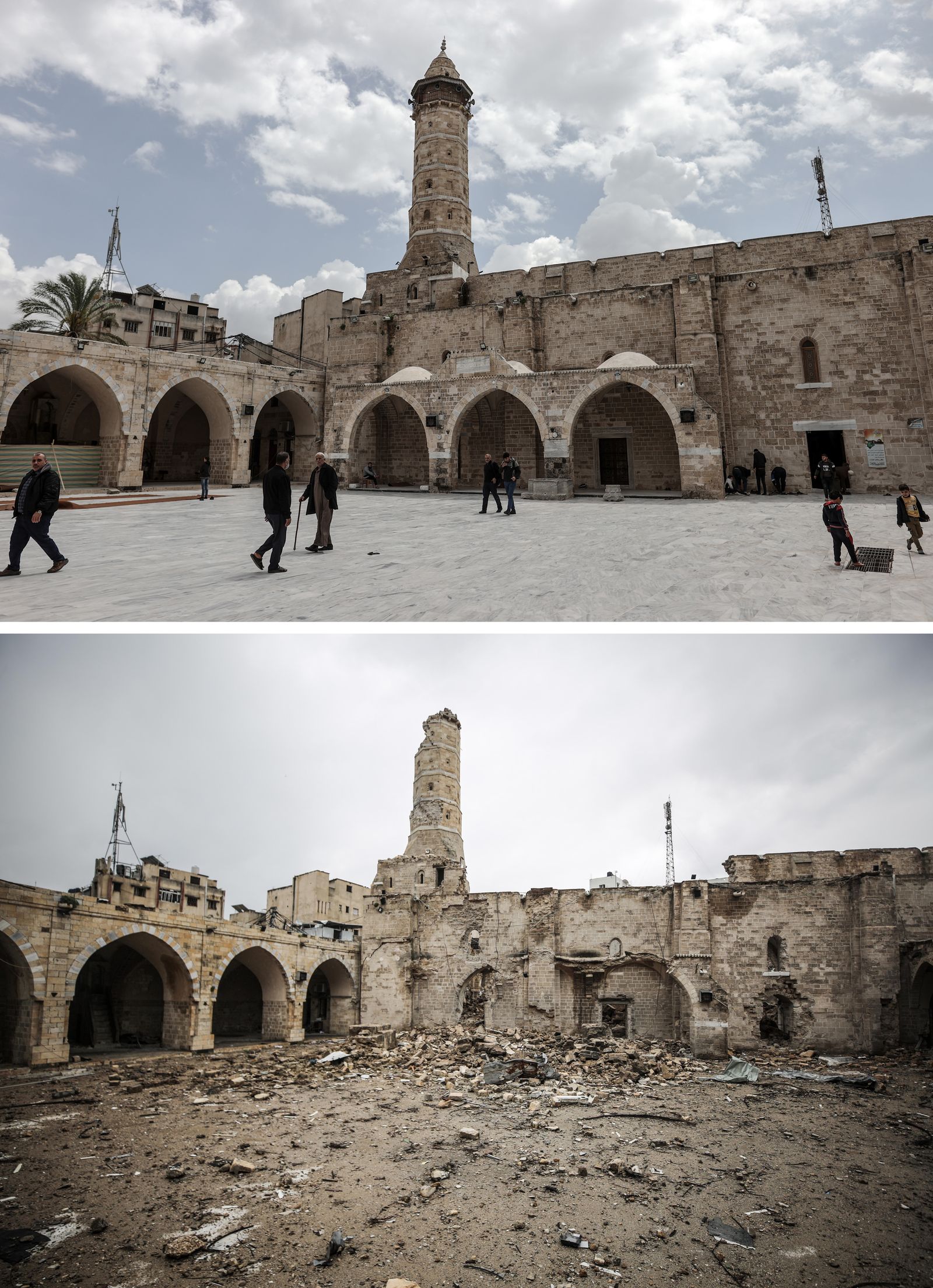
In Palestine, the destruction of heritage cannot be separated from the assault on everyday life. “The scale of damage to cultural heritage in Gaza alone is unprecedented in modern times,” says professor Loay Abu Alsaud, president of the Society for Palestinian Archaeology, noting that “approximately 226 of the 316 documented archaeological sites in the Gaza Strip have been damaged, many of them severely.” The number is devastating not only for what it measures, but for what it reveals – not isolated loss, but a broader dismantling of cultural continuity. Since 2023, the Great Al-Omari Mosque has sustained heavy structural damage; the Saint Hilarion Monastery/Tell Umm Amer has seen major harm to its exposed remains, mosaic floors and architectural units; Qasr al-Basha has suffered damage to its walls, chambers and decorative surfaces; and the Church of Saint Porphyrius, one of Gaza’s oldest functioning churches, was damaged even as it sheltered civilians.
This is perhaps why the loss of heritage in Palestine feels so piercing across the Arab world – it is not nostalgia, but recognition. “It represents the loss of memory, identity and continuity,” says Abu Alsaud. In the West Bank and Old Jerusalem, the threat takes a different form than in Gaza, but remains grave. There, Abu Alsaud warns, heritage sites are endangered by settlement expansion, infrastructure works and archaeological excavations carried out without adequate Palestinian participation, raising serious concerns under the 1954 Hague Convention, which requires occupying powers to protect cultural property.
In high-risk situations, the question arises: do international bodies like Unesco have the means to respond effectively when heritage is threatened by a fast-moving conflict? “Yes, they do,” says architect and cultural heritage specialist Joe Kallas, who is also a Unesco consultant and restoration expert. He further adds, “They are most effective when they operate on two levels at once – the diplomatic-legal level and the practical-operational level on the ground. The strongest responses happen when international legal protection, technical assistance, emergency funding, satellite monitoring and local preparedness work together.”
Lebanon’s monuments embody this fragile balance between endurance and exposure. Kallas points to Tyre and Baalbek, two of the Arab world’s most celebrated archaeological sites, as remaining at serious risk because of them being located in areas affected by hostilities and nearby military activity. “The risk is not only sudden destruction, but also slow degradation,” he says. Shockwaves, fire, restricted access and interrupted maintenance can damage a monument even when it is not directly hit.
The damage to Maqam Shamoun Al Safa carries another register of grief. The shrine belongs to a sacred geography shared by Christians and Muslims alike. Kallas speaks of the way war changes heritage “not only materially, but emotionally and socially”. A site once woven into daily life can become “associated with fear, absence or rupture”. And yet, he adds, such places can also become “anchors of continuity at moments when everything else feels unstable”.
Technology has become one of the few defences available when monuments cannot be fully protected. In Lebanon, Kallas argues that advanced documentation is no longer secondary to preservation, but central to it, becoming one of its core defences. “Digital archiving and new technologies have transformed how we prepare for, respond to and recover from crises,” he shares. “After the Beirut port explosion in 2020, Lebanon’s heritage field saw very clearly how technology could accelerate emergency assessment, prioritisation and recovery.” Photogrammetry, laser scanning, GIS platforms, drone surveys, digital inventories and satellite monitoring now help create a baseline before a crisis, guide emergency response during it and inform recovery after damage occurs.
The latest attack on the region has also cast a shadow over Golestan Palace in Iran’s Tehran, where reported damage has renewed concerns regarding the vulnerability of one of the Qajar era’s most important royal complexes. Within its walls, mirrored halls catch and scatter kaleidoscopic light across thousands of tiny glass fragments.
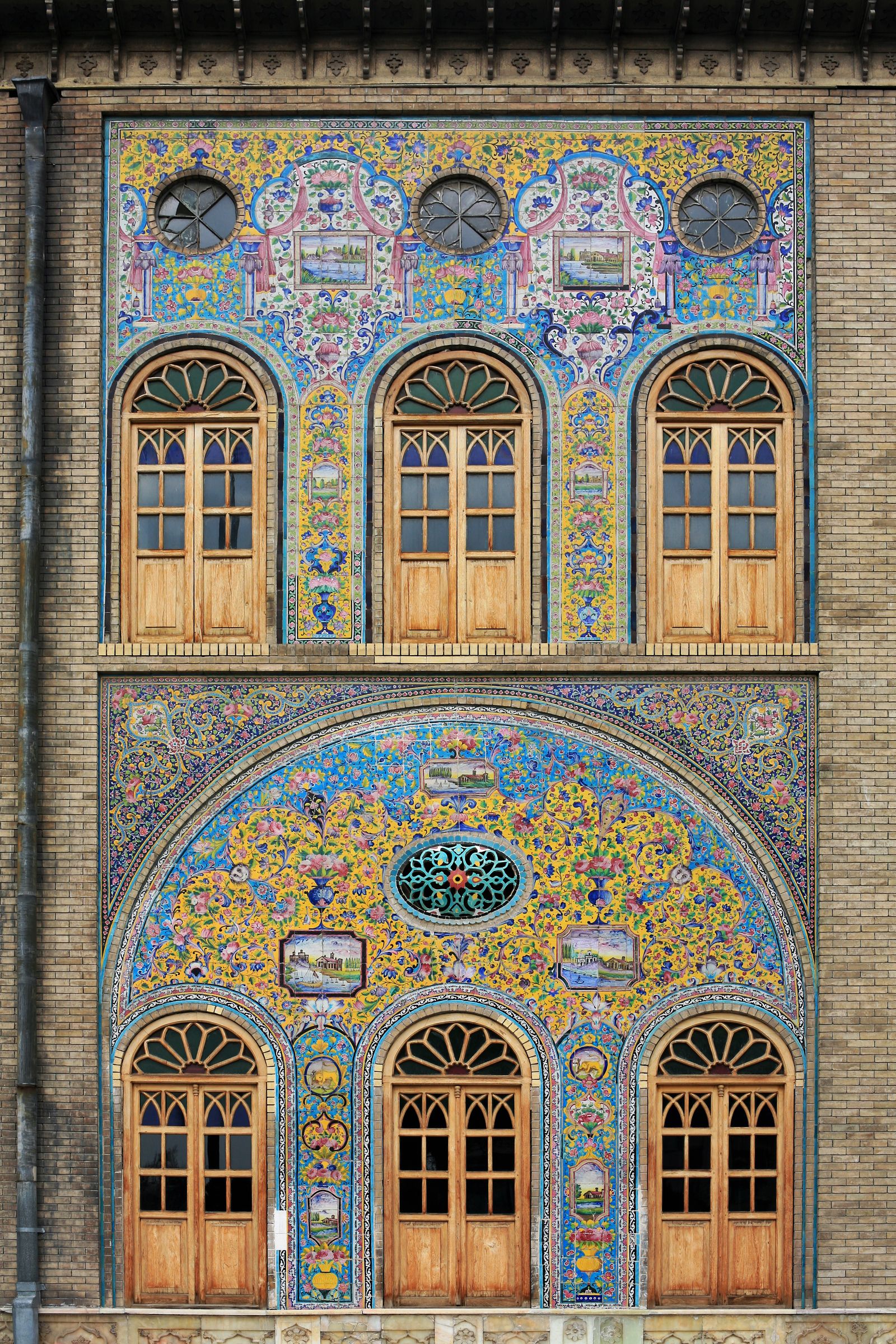
The palace’s mirrored walls were created through the meticulous art of ayeneh-kari, in which countless small pieces of cut mirror were set by hand into plaster to form intricate geometric and floral patterns. Designed to catch and reflect light across the surface, the mirror mosaics have transformed the palace interiors into shimmering spaces of illusion.
Restoring the palace will demand far more than repair – a meticulous process of stabilisation, documentation and expert conservation, especially of its shattered mirrored halls, where each fragment of ayeneh-kari must be treated as part of the palace’s historical fabric. At a site of such significance, restoration doesn’t simply mean replacing what was broken, but safeguarding the fragile material language of memory and craftsmanship.
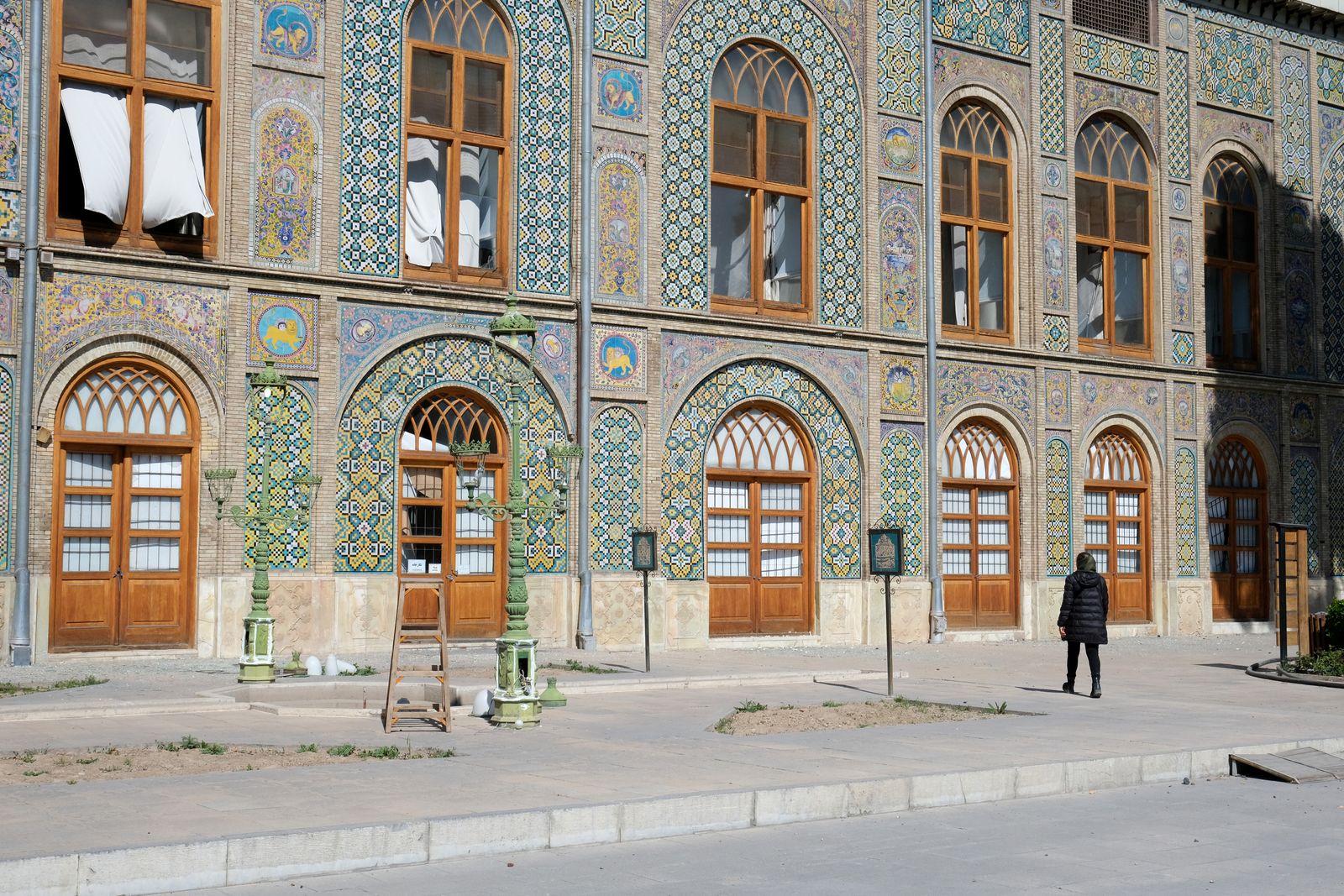
These rooms embody a courtly world of aesthetic refinement, preserving a vital chapter in Iran’s modern history. The threat to the palace once again underscores a truth the region knows too well – heritage is never protected by beauty or historical significance alone. A monument can quickly become vulnerable when conflict moves faster than the systems meant to safeguard it.
What remains then is not simply rubble, but a deeper struggle over continuity itself. Across the region, monuments stand at the meeting point of memory and inheritance. Heritage offers people evidence of presence, a language of belonging and a place within a longer human story. When a monument falls, that story is endangered; when it is protected, so too is people’s right to remain legible to themselves.


