


When we think of fringe, the mind wanders toward a very specific, dust–coated nostalgia. Think ’70s bohemia, weathered suede, and the mid–2010s festival circuit where it became shorthand for off–duty cool. It was the era of desert dressing, immortalised at Coachella by Vanessa Hudgens and the Hadid-Jenner clan.
The current iteration presents a rare synthesis of bohemian chic, structural sophistication, and cinematic grandeur. Designers now build this embellishment into the very scaffolding of a garment, shaping it to respond to the body so that every turn activates the piece.

Even at Coachella this year, the aesthetic felt more composed; Kylie Jenner and Sabrina Carpenter leaned into kinetic, tailored pieces. For her set, Carpenter appeared in a custom look by Dior that built fluidity directly into the design. Fringe now sits within the architecture of clothing, running through seams, panels and silhouettes.
And it’s not limited to the stage. Olivia Dean carried a bag finished with tassels at the Burberry Winter 2026 Fashion Show, while Olivia Rodrigo and Selena Gomez wore it on the red carpet. Zara Larsson also worked it into her tour looks.
The trim has moved beyond nostalgia. Fashion houses and independent labels are using it to shape garments and control how they sit on the body.
On the Spring/Summer 2026 runways, the execution embodied couture-like rigour. Chanel, Loewe, Balmain, and Alexander McQueen treated fringe with the same gravity as pleating or a darted waist. They built it into tailoring, eveningwear and engineered surfaces, planning its placement and behaviour from the first sketch. Accessories follow the same logic. Acne Studios, Burberry, Stella McCartney and Gucci use it across bags and shoes with clear intent.
Material choices make the difference. Laser-cut leather tassels follow the form with disciplined fluidity, while ultra–fine silk threads soften eveningwear and move lightly with each step.
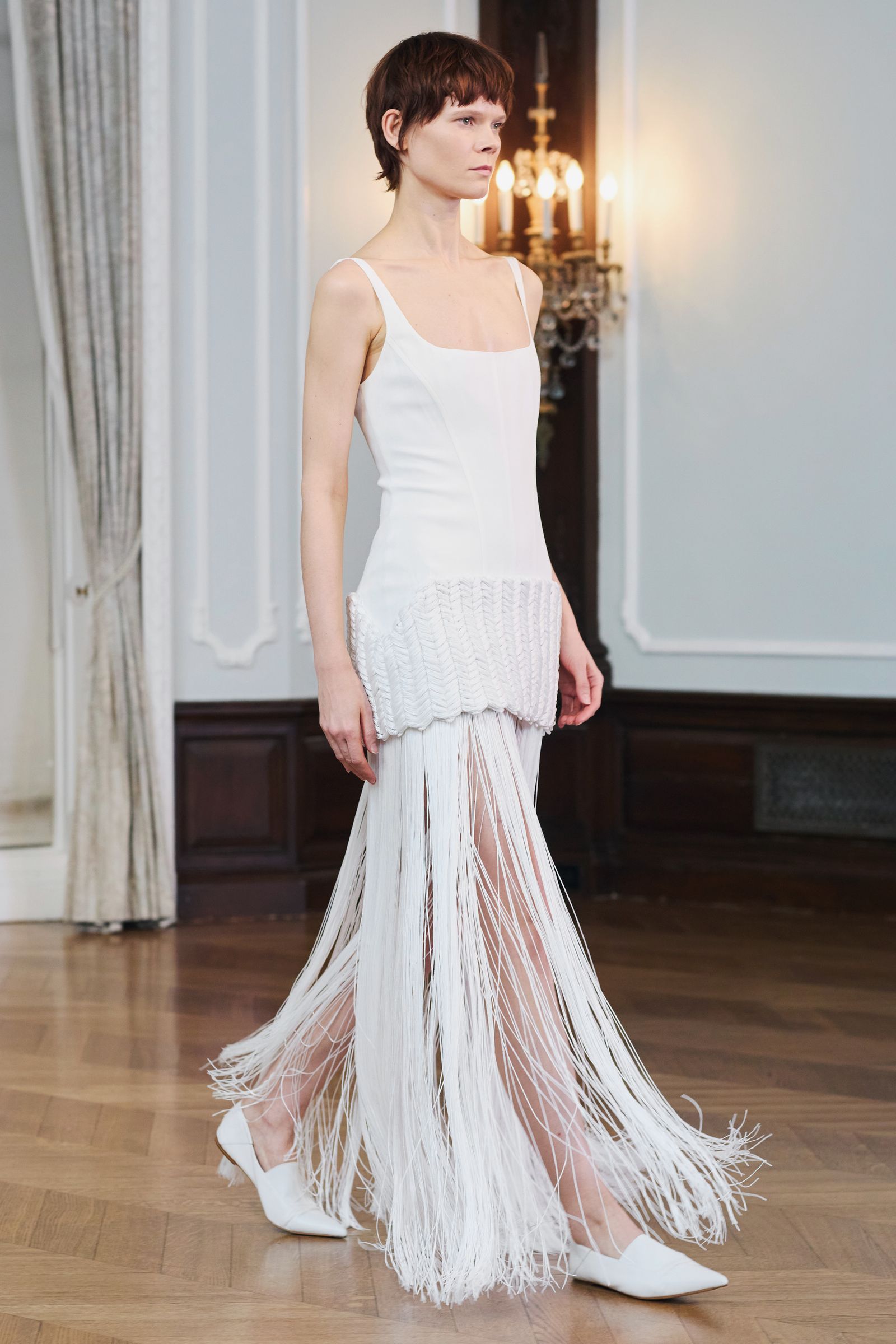
For Svitlana Bevza, founder of Bevza, that movement sits at the core of the idea. “Fringe brings garments to life,” she notes. “Its return reflects a focus on tactility in an increasingly digital world.” One of the label’s standout pieces features a hip belt of hand–knit braiding that takes eight hours to complete in the atelier, giving the piece a sense of weight beyond decoration.
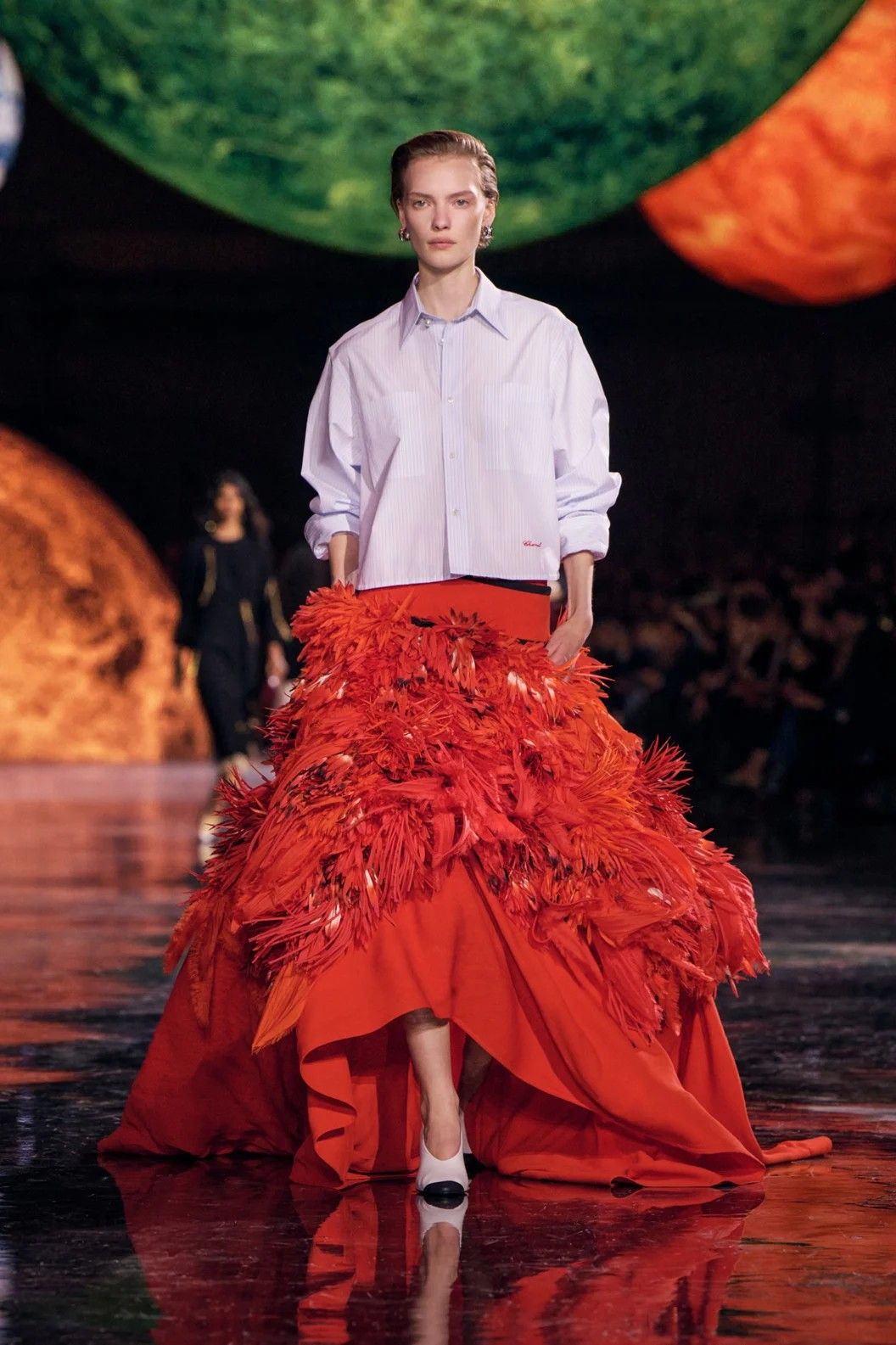
A fringed skirt or pair of trousers pairs best with something structured, such as a crisp shirt or a clean button–down. A tasselled or trim–finished top with tailored trousers or straight–leg denim keeps things grounded.
If you want more impact, go for a dress. Keep the placement controlled at the hem, sleeves, or sides so the shape stays clean. Finish with minimal sandals or boots and a neutral jacket.
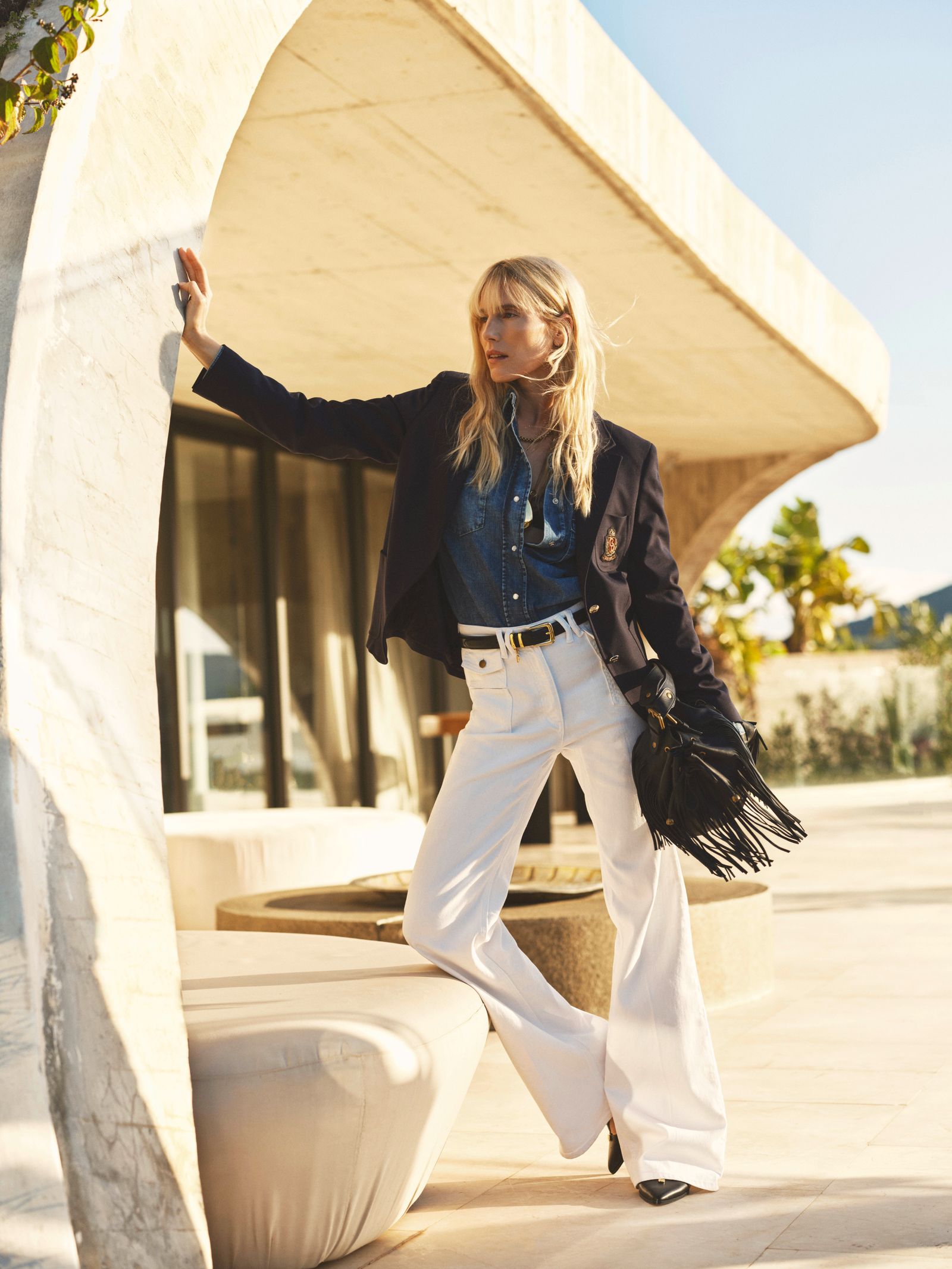
Fringe integrates naturally into outerwear. A suede jacket with trim detailing pairs well with denim, a white shirt or fine knits. Neutral tones like black, camel and ivory keep everything cohesive, while clean lines keep the look feeling unforced.
Accessories are the easiest way in. A spokesperson from Gerard Darel points to bags as the starting point. Their 24H bag, reworked with fringe, adds interest without changing how it functions.
Shoes are a low commitment option. A boot, pump, or sandal with subtle shimmy adds just enough detail. Pair it with a clutch finished with exaggerated tassels and keep everything else clean.
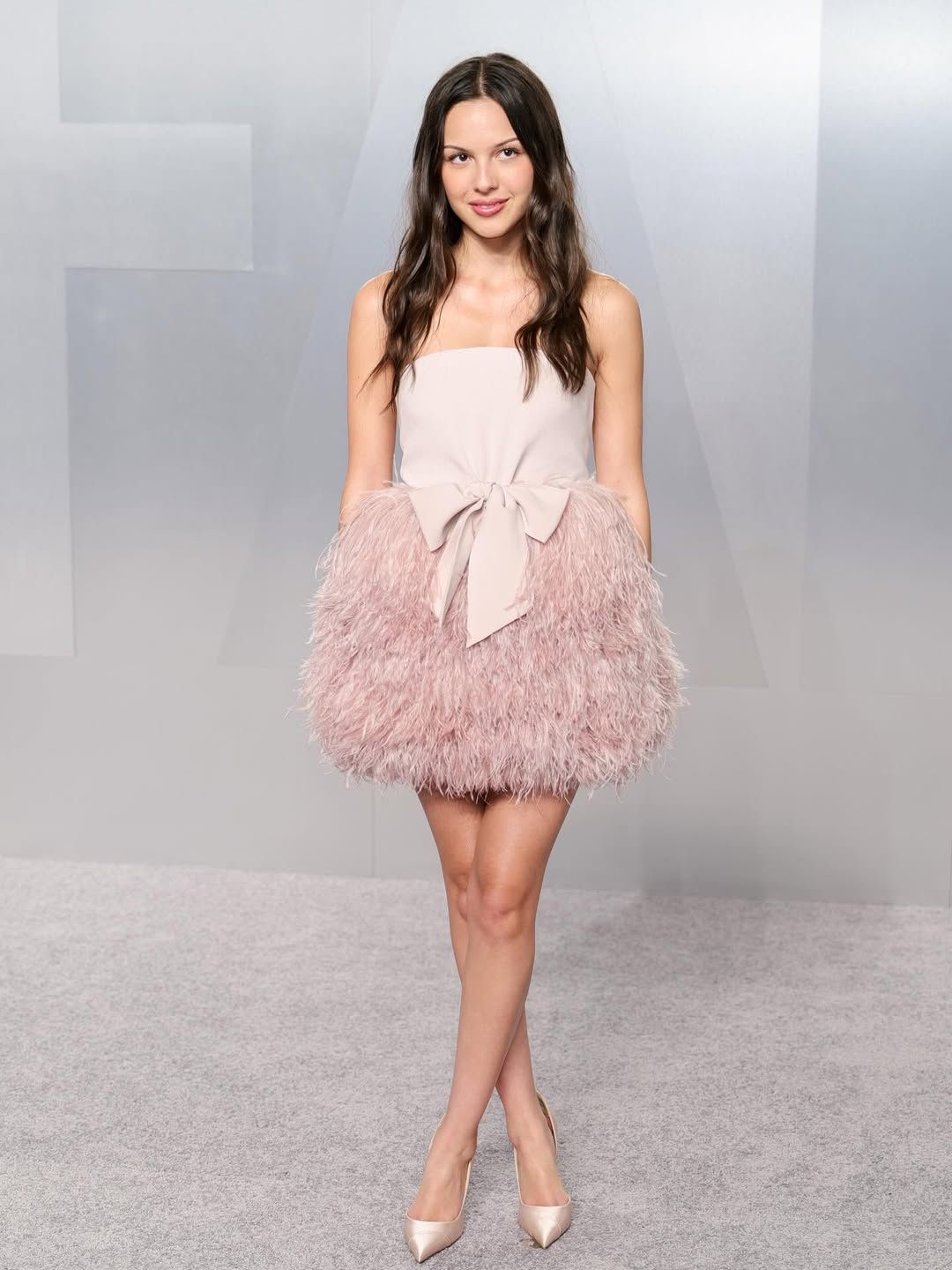
Cin Cin founders Geo Moriarty and Louise Lazarus suggest working with proportions. They recommend asymmetric hemlines and layered finishes, paired with sleek silks or natural fibres to keep the look refined. A long fringed scarf adds versatility and can be worn at the neck, across the body or at the hips.
That notion also works just as well in jewellery. Long cascading earrings or fine chains add movement close to the face. Keep the rest minimal with bare shoulders or a simple neckline and let it carry the look.


