


At Chanel’s Resort 2027 show in Biarritz, Matthieu Blazy didn’t just debut a new It-shoe – he proposed the idea of no shoe at all. Models walked in delicate heel structures tied to the ankle, leaving the sole entirely bare. It was eerie, divisive, and instantly viral.
But while the internet has been quick to label them “freaky,” fashion has seen this kind of extremity before.
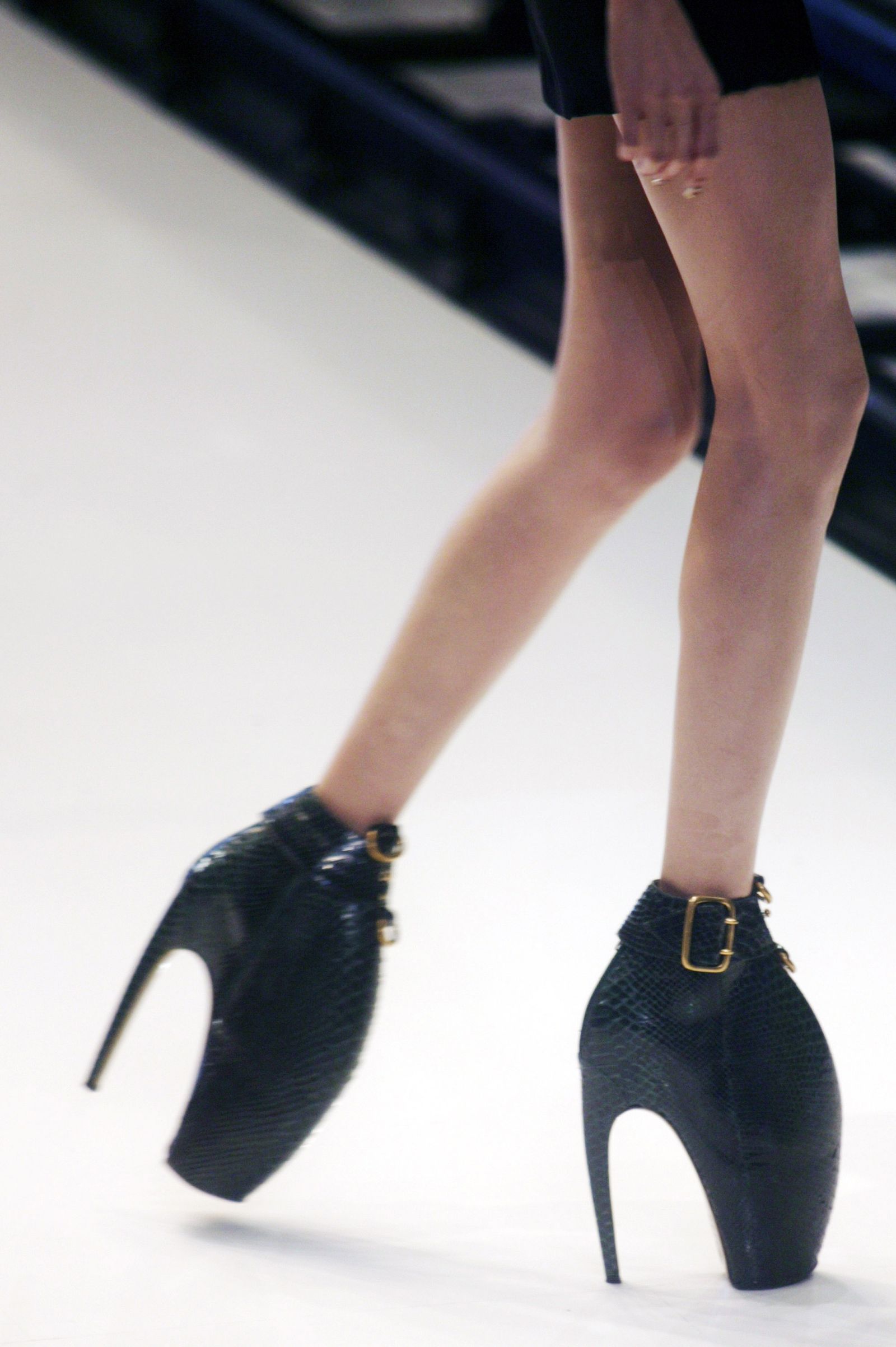
Chanel’s barely-there heels join a lineage of runway shoes that were never really about practicality. Think Armadillo shoes by Alexander McQueen – those alien, gravity-defying platforms that became as infamous as they were unwearable.
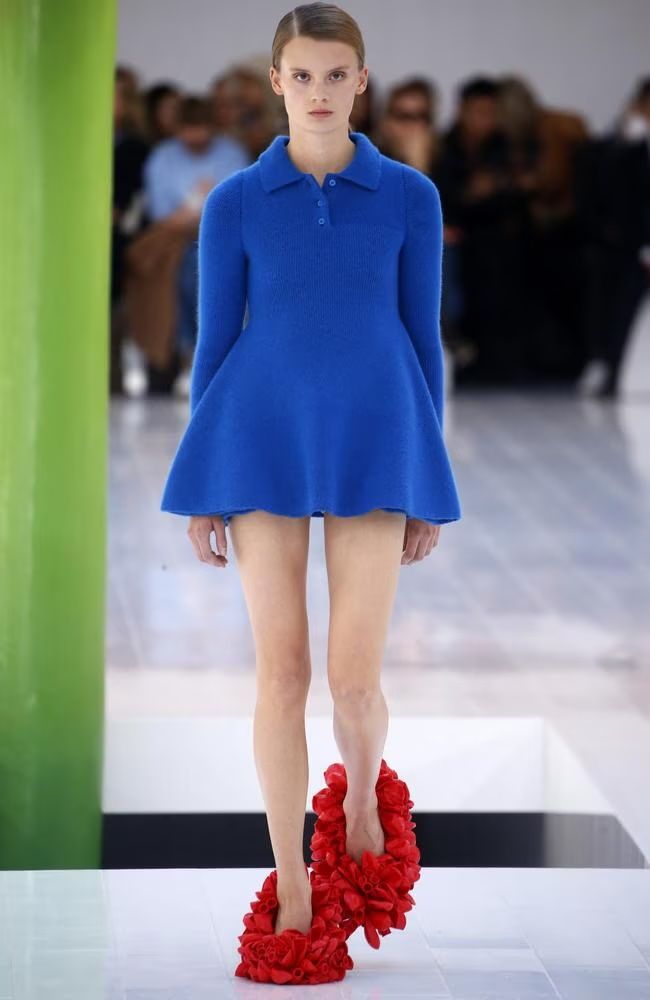
More recently, Loewe under Jonathan Anderson sent out heels wrapped in clusters of unblown balloons – playful, slightly absurd and deliberately impractical. At Schiaparelli, the surrealist tradition continues with sculptural wedges shaped like human feet, turning anatomy itself into ornament.
In that context, Chanel’s “shoeless shoe” feels less like a shock tactic and more like a continuation – another chapter in fashion’s ongoing fascination with the absurd, the sculptural and the conceptual.
Still, Blazy’s version carries a distinctly Chanel sensibility. Staged in Biarritz, the collection subtly echoed Coco Chanel’s early years, when she designed for a new kind of woman – one who valued ease, movement and seaside leisure.
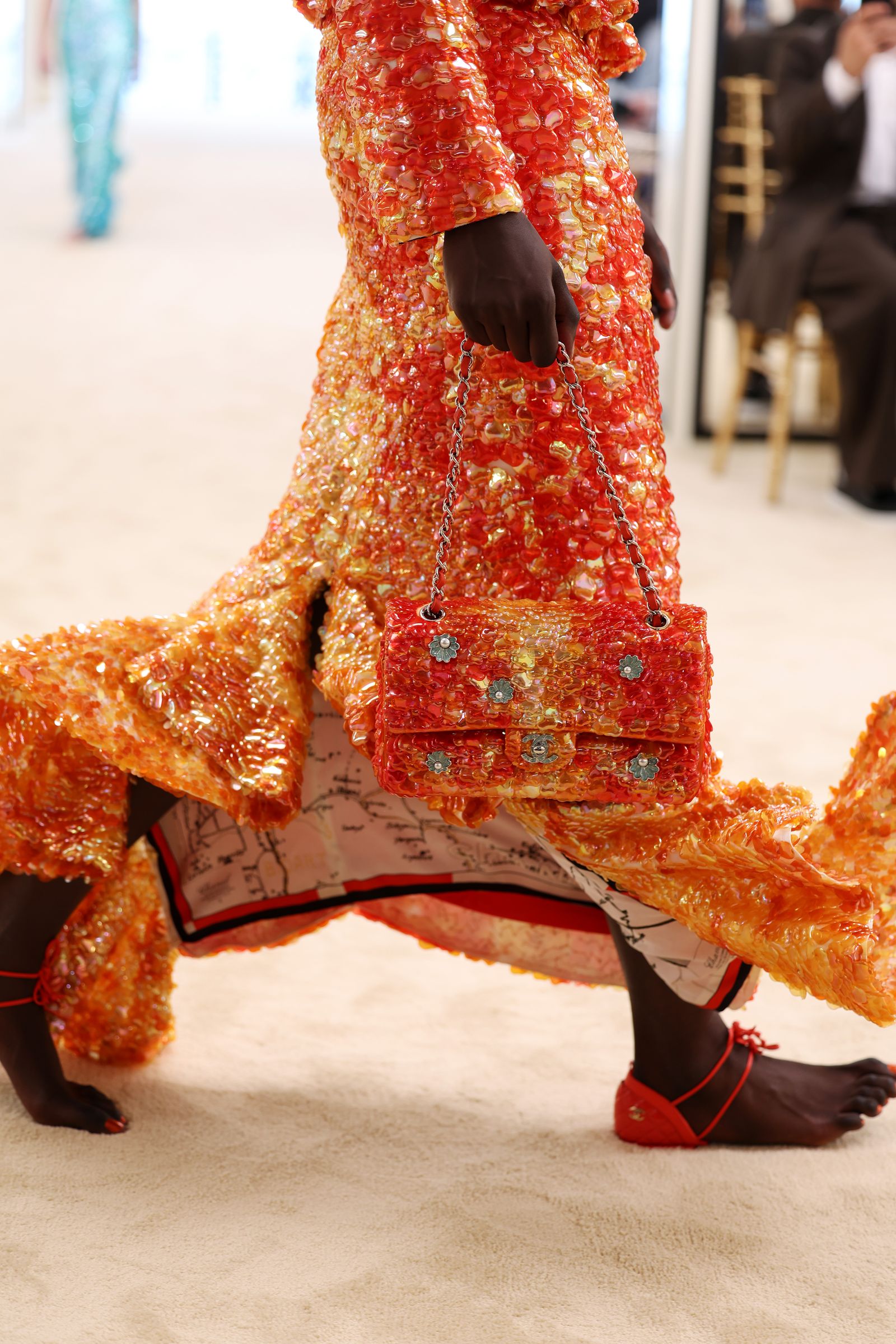
There’s a romantic image often associated with Chanel: a woman walking along the beach, shoes in hand, unbothered by convention. These heels almost literalise that idea. They separate the symbol of the heel from the function of the shoe, as if capturing the moment just after you’ve slipped them off.
Look closer, and the design starts to feel almost mythological. The delicate structures wrapped around the ankle evoke Talaria – the winged footwear of the Greek God Hermes, designed for speed and weightlessness.
Blazy’s design also taps into a broader shift: the rise of the “anti-shoe.” Across recent seasons, footwear has been getting lighter, thinner and more conceptual. Chanel simply takes that logic to its extreme, stripping the shoe down to its most symbolic element.
The result is something uncanny. By exposing the entire foot, the design draws attention to anatomy – the arch, the toes, the act of balance itself. It’s intimate, slightly surreal and undeniably provocative.
Of course, the question remains: who would actually wear these?
But that may be beside the point. Like McQueen’s Armadillos or Loewe’s balloon heels, Chanel’s barefoot heels are less about utility and more about imagination. They’re designed to circulate, to spark debate, to exist as images as much as objects.
And in that sense, they’re wildly successful.
Because whether you see them as absurd, poetic, or quietly brilliant, one thing is certain: you can’t stop looking at them.


