


Something old, something new; something borrowed, something blue — so the saying goes. For some brides, the first of those auspicious points might mean popping in a pair of antique earrings. But for the daring, it means anything from archival couture to thrifted lace slips. The ever-growing popularity of resale means modern brides are increasingly opting for pre-loved bridalwear. The appeal? A bride not only gets to exhibit her fashion prowess with a vintage IYKYK piece or a resale steal, but she can also almost guarantee that no other bride will be in her wedding dress.
At receptions across the globe, brides are ditching heavy gowns for white minis – fun, flirty, and oh‑so practical
-3.jpg)
“It’s hard to feel connected to a gown and to feel like it’s yours if you’ve already seen it on multiple brides all over your social media feed,” explains the founder of Happy Isles, one of the leading vintage bridal and resale salons in Los Angeles and New York. “No longer is something being ‘designer’ enough to turn a bride’s head”. The second-hand market, by contrast, offers singularity. Pre-loved dresses arrive as mysteries: deadstock that never saw the aisle, runway samples, gowns with discreet traces of their past — a stitched blue bow, a monogram hidden in the lining. And almost always, they’re reimagined. Hems shortened, sleeves removed, buttons swapped. What might have been someone else’s becomes entirely her own.
Instagram content
Not to mention, the rise of vintage fashion has brides buying into the quest for substance. A Galliano-era Dior or bias-cut silk slip from the 1930s isn’t just rare — it’s Instagram-proof. To source a Catherine Rayner or vintage Azzaro is not a matter of thriftiness, but taste. Princess Beatrice wore a vintage Norman Hartnell dress previously belonging to the Queen when she wed Edoardo Mapelli Mozzi in 2020, signalling to many a bride-to-be that something borrowed has never felt so modern.
According to Lyst’s Wedding Report, searches for pre-owned wedding dresses rise by 93 per cent year-on-year. And if the old fear was that pre-loved meant passé, the opposite is true. The resurgence of bias-cut slips, bow details, and Basque waists, for instance, has sent brides deep into Happy Isles’ archives: “whatever the modern trend may be, there is always a pre-loved equivalent”.
Forget fairytales as you know them. From slinky slips and sheer dresses to sculptural suits, the modern bride is dressing for herself, not the storybook
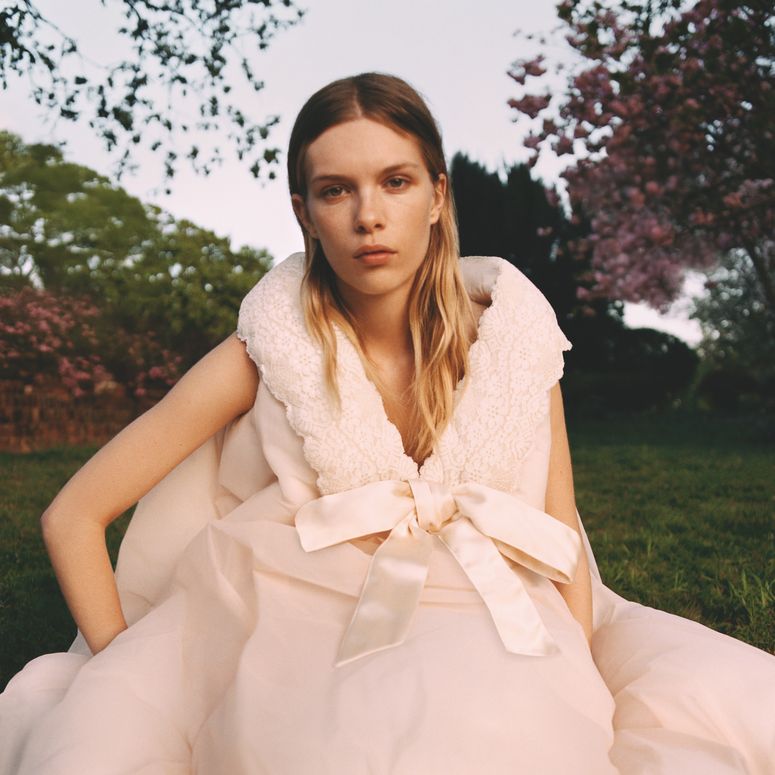
The desire to forego the traditional wedding dress framework resonates in a region where multi-day celebrations often demand multiple looks. In Dubai, Endless — a leading rental and resale platform — recently launched its first bridal edit in response to demand. Cost plays a crucial role, as founder Rosie explains, “The modern bride is prioritising experience and values over excess. Many don’t want to spend thousands on a dress they’ll only wear once”. Endless works with both brand-new gowns and nearly-new pieces that are carefully restored and authenticated. Renting or re-wearing ensures that luxury isn’t tied to permanence, but to curation.
Instagram content
Though, the second-hand bridal boom isn’t just a quirk of the resale economy — it’s a sign of how women are redefining luxury and values. Not to mention, bridalwear sits at the sharpest edge of fashion’s waste problem. For decades, the wedding dress has been mythologised as the ultimate single-use garment: worn once, preserved in tissue paper, and tucked into the back of a wardrobe. Pre-loved bridalwear sits at the nexus of sustainability and individuality, answering the modern bride’s desire for something personal, responsible, and singular. London’s leading luxury bridal resale platform The Loop takes a long view: “[brides] feel a sense of responsibility about the world around them and that ‘newness’ can also mean purchasing things with a story, are second hand, timeless and have great quality to them”.
If the wedding dress was once an emblem of permanence, it is now part of fashion’s circular economy. A dress can be worn, loved, and passed on. And perhaps that’s the most romantic detail of all. To wear a second-hand gown is not to compromise, but to signal discernment — a fashion eye attuned to both style and substance.

-2.jpg)

